Choose reading mode (more settings inside the app)
Seven evidence-based methods for adults with ADHD, each one explained by what it fixes and how to start using it today.
Adults with ADHD read better when they change what the task demands rather than trying harder at it, and seven strategies cover most of what that means in practice: read actively instead of passively, set up the space and the hour before you start, cut long text into chunks with planned pauses, bring in a second sense such as hearing, prepare before you reach page one, build movement into the session, and use the tools that already sit on your phone and your desk. Each one targets a different failure point, so you can pick the two that match where your own reading falls apart. You do not need all seven, and starting all seven at once is the quickest way to abandon the whole list by Thursday.

If sitting down with a book or a long work document feels like wrestling a whirlwind, you are in very ordinary company. The tangents, the restlessness, the moment at the bottom of a page when you realize that none of it stayed with you: all of that is standard with ADHD, and none of it says anything about your intelligence or your effort. It turns up in study, at work, and in the books you actually chose for pleasure. Most adults with ADHD have been told at some point to simply concentrate harder. That advice fails because attention is the thing in short supply, not the cure for it being short. Every strategy below works by lowering what reading asks of you rather than asking more.
The seven sections that follow share the same shape: what the strategy fixes in an ADHD brain, then how to put it into practice. Choose one or two and give them a couple of weeks before you add anything else. If you would rather understand the mechanics of the difficulty first, our article on why ADHD makes reading harder is a good place to begin.
One piece of background makes the rest of this easier to follow. ADHD involves difficulties with executive function, and CHADD explains that those functions handle planning, sustained attention and working memory. Reading calls on all three at the same moment, so a page of dense text draws on exactly the capacities that ADHD leaves in short supply.
The Seven Strategies
1. Read Actively
Why it works: passive reading leaves your mind with nothing to hold, so it wanders off in search of something better. Active reading turns the page into a job with something to do in every paragraph, and that steady small demand keeps focus in place, processes the meaning more deeply and stores it more securely. Highlighting, note-taking and summarizing recruit exactly the executive functions that ADHD leaves running short, instead of hoping they hold up on their own.
How to implement it:
Pick up a pen and mark the book, or use digital annotation if you would rather keep the pages clean. Underline the key ideas, the parts that surprise you and anything you disagree with. The physical act of marking is half the benefit, because it keeps your hand and your eyes tied to the same spot on the page. There is no need to be careful about it, either. A messy book with arguments scrawled in the margin is a book you genuinely engaged with, and in six months it will mean far more to you than a spotless copy.
Summarize as you go, in the margin or in a notebook beside you. At the end of each section, write down the point in your own words. Rewording something is only possible once you have understood it, which is precisely why the habit works so well. Keep each summary to a sentence or two. Longer ones slide into copying, and copying gives you the pleasant feeling of having studied with none of the actual effect.
Argue with the text while you read it. What is the main claim here? How does it fit with what I already know? Where is this heading next? That running conversation is what keeps your mind attached to the page instead of drifting three thoughts away from it. For more on how this feeds memory, explore active reading and memory retention.
2. Engineer the Environment and the Time
Why it works: adults with ADHD react strongly to what is happening around them and to what is happening inside them. A dedicated space with little competing for your senses means less energy burned on filtering and more left over for the text itself. Scheduling a specific time solves the other half of the problem, which is starting at all, and it lets you spend your sharpest hours on the reading that actually needs them.
How to implement it:
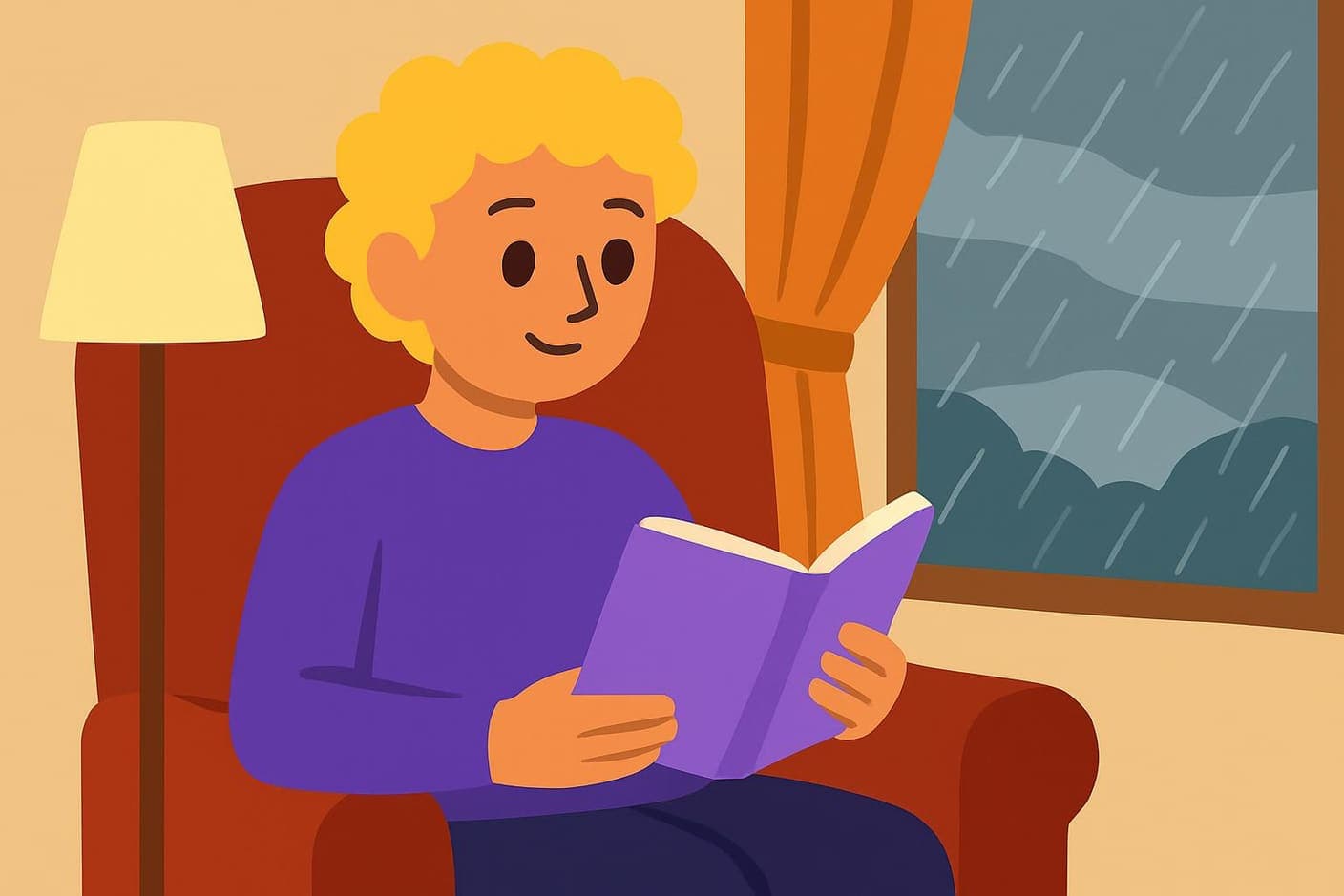
Set up a reading zone that is quiet, comfortable and free of clutter. If movement at the edge of your vision keeps stealing your attention, face a wall or put a screen behind your desk. Using the same spot every time helps more than most people expect. After a few weeks the place begins doing part of the work for you, because sitting down there becomes a signal that reading is what happens now.
Deal with the sound next. Noise-canceling headphones suit many people, while white noise or instrumental music helps if complete silence leaves you restless. Tell the people around you that you need an uninterrupted block, and be specific about how long it will last. Music with lyrics is the one thing worth ruling out entirely. Your language system is already busy handling the text on the page, and words arriving through your ears compete for the same machinery.
Then block the time in your calendar. Fifteen to twenty-five minutes is plenty at the start, and treating it as a real appointment matters more than the length does. Put it where your energy actually is, which for most people is not the final hour of the working day. Choosing to read a dense report at six in the evening is choosing to read it badly. There is more on all of this in our guide to distraction-free reading with ADHD.
3. Chunk It and Pace It
Why it works: a wall of unbroken text triggers avoidance before you have read a single line of it. Chunking turns that wall into pieces you can finish, and a piece you can finish is a piece you can start. The Pomodoro Technique supplies the other half by alternating focused intervals with short breaks, which protects your attention and heads off the mental fatigue that usually ends a session long before you planned to stop.
How to implement it:
Divide the text before you begin. Break the chapter or the article into sections that make sense on their own, work through one at a time, and stop at the boundary you chose. Stopping at a planned point does more good than it sounds like it should. You end the session having finished something, instead of running out of fuel halfway through a paragraph and closing the book on a small defeat.
Use a timer: roughly twenty to twenty-five minutes of reading, then three to five minutes away from it. That break is not slacking off, it is what resets your attention for the block that follows. Keep the timer somewhere you can see it. Knowing the session has a definite end makes it far easier to begin, and it removes the low background dread that comes with any open-ended task.
After four rounds, take a longer break of fifteen to thirty minutes. It keeps burnout at a distance and gives your brain room to consolidate what you have just read. Treat every number here as a starting point and adjust it to your own attention span rather than bending your attention span to fit the numbers.
⏵
Visual Cues for Chunks Bookmarks, colored sticky notes or digital markers show you where each chunk ends. Watching those markers move through the book is genuinely motivating on days when the reading itself is not.
⏵
Set Micro-Goals Give each chunk a small aim, such as understanding one argument or finding three facts you could repeat afterwards. A section with a point is much easier to finish than a section you are simply getting through.
⏵
Integrate Rewards Attach a small reward to finishing a set number of chunks. It matters more than it sounds, and we cover why in our guide to reading motivation with ADHD.
4. Bring In a Second Sense
Why it works: information arriving through two senses is held better and longer than information arriving through one. Seeing the words while also hearing them builds more than one route to the same meaning, so the material has a second way in. It also buys you stamina, because when one channel tires out the other keeps you moving, and that is exactly what long or dry material tends to test.
How to implement it:
Read aloud to yourself, even at a whisper. Speaking and hearing pull in parts of the brain that silent reading leaves idle, and they make drifting impossible to miss. Nobody reads aloud on autopilot for a page and a half, because the moment your attention leaves the page your voice stops and you notice it happening.
Use text-to-speech, which is already built into most phones and computers. Listening while your eyes follow the same words usually improves both comprehension and pace. Set the voice slightly faster than your own silent reading speed. Somewhere around ten to twenty percent above your silent pace is usually right; push much past that and comprehension starts to fall away.
Pair an audiobook with the printed edition and take in the same passage both ways at once. The narrator holds a steady pace and keeps you anchored to the line you are on, which is precisely the thing that tends to slip. Many readers find this is what finally makes a difficult book possible, and the same experience turns up in Teva Pharma's patient stories.
5. Prepare Before Page One
Why it works: getting started and organizing your thinking are two of the weaker points in ADHD, and preparation addresses both at once. A few minutes spent skimming, spotting the main ideas and deciding why you are reading gives you a frame to hang everything else on. Five minutes of preparation is generally enough, and it is the step most readers drop first when they are short of time.
How to implement it:
Survey the material first. Skim the headings and subheadings, the bold text, the images and charts, the introduction and the conclusion, and get a feel for the shape of the thing before you commit to it. Three minutes here saves twenty later, because you stop giving every paragraph the same weight and start knowing which ones carry the argument.
Then turn those headings into questions. What do you expect this section to teach you? What do you want it to answer? A question gives your attention something specific to hunt for, and hunting through a text is a far more natural act for an ADHD brain than sitting still and receiving one.
State your purpose out loud or on paper. Are you after one specific fact, working to understand a concept properly, or reading for pleasure? Naming it sharpens the focus of the whole session, and it also tells you how to read. Hunting for a single number and reading slowly for understanding are different activities, and treating them as the same one is how an hour quietly disappears.
6. Build In Movement
Why it works: the hyperactivity in ADHD often shows up as physical restlessness or a steady internal pressure to move, and in adults it is felt far more often than it is seen. Holding it down costs energy you were going to need for the reading. Short bursts of movement release that restlessness, push blood to the brain and reset your attention, so you come back to the page sharper rather than more worn out.
How to implement it:
Schedule micro-breaks instead of waiting until you cannot sit still any longer. One or two minutes of movement every twenty or thirty minutes works well for most people, or simply between chunks if you are already breaking the text up that way.
Almost any physical activity does the job. Stand up and stretch, walk to another room, do jumping jacks, run through a couple of yoga poses. What matters is that the body actually moves. Keep it short, and keep it away from a screen. Two minutes of scrolling is not a break, and you will come back to the page less able to focus than when you left it.
Add a moment of refocusing at the end of the break. A minute of quiet attention on your breathing settles the mind before you return to the text, and it draws a clear line between the break and the work. Experts often emphasize how much breaks contribute to comprehension rather than take away from it.
⏵
Use Tactile Fidgets Quietly A stress ball, a piece of putty or a spinner ring gives restless energy somewhere to go without pulling your eyes off the page or disturbing anyone nearby.
⏵
Vary Your Reading Posture Switch between sitting, standing at a raised desk and using a reading stand. Changing position resets both the restlessness and the fatigue that builds up in any single pose.
⏵
Incorporate 'Body Doubling' Having someone else quietly working or reading in the same room often sharpens focus and takes most of the pull out of the urge to wander off.
7. Use the Tools That Exist
Why it works: assistive tools take a difficulty off your plate rather than asking you to push through it. Trouble tracking lines, dense blocks of small text, slower processing speed: each of these has a tool built for it, and every bit of load you hand over is load your attention no longer has to carry. That is what turns a long reading session from something grim into something survivable.
How to implement it:
Use a reading guide, which can be a ruler, a strip of colored card or a digital line reader. It keeps your eyes on the line you are actually reading, and it helps most in dense paragraphs where the lines start blurring into one another. If you catch yourself rereading the same sentence without meaning to, this is the tool that fixes it, and a folded index card costs nothing to test the idea with.
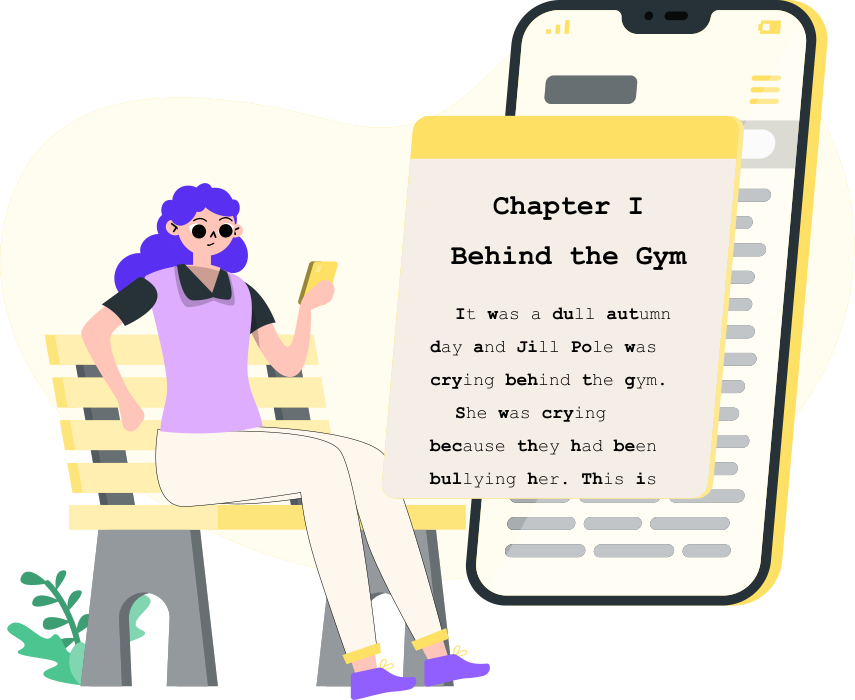
Adjust the fonts and the display. Many people read sans-serif faces such as Arial or Verdana more comfortably, and some prefer a specialist font like OpenDyslexic. Change the size, widen the line spacing and soften the background: cream or a light gray is much easier on the eyes than bright white, especially over an hour. Celer does exactly this on iPhone and iPad, with hand-designed themes and dyslexia-friendly fonts including OpenDyslexic, applied to your own EPUBs and PDFs rather than only to web pages.
Try focus apps and browser extensions. Reader View strips the ads and clutter out of a web page and leaves the article behind. Others handle text-to-speech, pacing or blocking distractions outright. Organizations such as ADD.org keep lists of resources that are worth working through.
Test colored overlays as well. Some readers find that a transparent colored sheet laid over the page reduces visual stress and makes the text easier to hold on to. The effect is very individual, so try a few colors before you decide either way. Overlays cost almost nothing, which makes them worth ruling in or out early rather than leaving as one more open question.
Making It Work
Reading with ADHD is genuinely hard, and it is not fixed in place. Understand how your brain handles incoming information, apply these seven strategies with some consistency, and focus, comprehension and even enjoyment all start moving in the right direction. None of it is one-size-fits-all, which is exactly why the list runs to seven items instead of one. Some of them will do nothing at all for you. That is useful information rather than a failure, because every option you rule out narrows the search for the ones that fit.
Experiment, then stay with whatever works. Try the techniques, combine them, and adapt them to the material in front of you, whether that is coursework, a professional report or a novel you have been meaning to finish for a year. Be patient while the habits settle, because they take a few weeks rather than a few days. Given that time, reading stops being a reliable source of frustration and turns into something you can count on. For the full picture, our Ultimate Guide to Reading with ADHD collects strategies for every age and situation.
Try Celer free on iPhone and iPad
⭐️⭐️⭐️⭐️⭐️
"The only time I’m excited to read is with your app."
Dorcas
Related articles
Creating Your Ideal Distraction-Free Reading Environment for ADHD
How to set up a space that stops working against you, covering the four kinds of distraction that break an ADHD reader's focus.
Effective Note-Taking Strategies for ADHD Readers
Four systems that hold up against an ADHD brain, what each one is good for, and how to adapt them so you actually keep using them.
The Benefits of Reading Aloud for Adults with ADHD
Saying the words out loud engages three senses at once, forces a slower pace and gives you an audio version of the text. Here is how to use it.