Choose reading mode (more settings inside the app)
Twelve practical ways to help young learners with ADHD get past reading difficulties and start enjoying books.
Reading gets easier for a child with ADHD once you break the task into small pieces, let them move while they do it, and let them choose the book themselves, and those three moves account for most of the difference you will see. Everything else on this list builds on top of them rather than replacing them. What follows is twelve strategies, each one explained by what it fixes and how to put it into practice tonight, aimed at parents and teachers who want something usable this week rather than a theory of how reading develops.

Why Reading Can Be Hard for Kids with ADHD
Children with ADHD run into specific obstacles with reading rather than a general difficulty, and telling them apart is what makes the strategies work. Following a story is hard when your mind keeps leaving the room, words get skipped or guessed at from their shape, and when holding information in mind is difficult the meaning never assembles even though every word was decoded correctly. Knowing which of those is happening in front of you tells you which strategy to reach for first. The aim throughout is reading that is possible and then enjoyable, in that order.
Standard teaching methods often miss these children entirely, not because the methods are bad but because they assume attention that is not available. The strategies here support executive function, meaning the brain skills behind planning, focus and self-monitoring, and they make reading both more interesting and less effortful at the same time, which is what a struggling reader actually needs from the adults around them.
12 Reading Strategies That Work
1. Break It Down into Small Pieces
A full page of unbroken text is already too much for a child with ADHD before they have read a single word of it, because the sheer quantity registers first. Chunking cuts the reading into pieces small enough that finishing one is realistic.
Why it works: it protects focus and takes the intimidation out of the page before it can build. Finishing a small section is a quick win, and quick wins are what build the confidence to attempt the next one, so reading starts to feel achievable rather than endless.
How to do it: cover part of the page with an index card so that only one paragraph is visible at a time, and put sticky notes at clear stopping points through a chapter. For longer texts, plan short sessions in advance with a small goal attached to each one, and mark the end of each piece out loud so the child hears that they finished something.

2. Use Hands-On Reading
Get your child interacting with the text rather than simply looking at it, so that reading becomes something they are doing instead of something happening to them while they sit still.
Why it works: doing something physical with the page holds attention in place and helps memory at the same time. Choosing what to highlight or note requires thinking about the material, and that thinking is where understanding actually comes from, which turns a passive activity into an active one.
How to do it: bring out colorful highlighters or erasable pens and assign a color to new words, to characters and to important moments. Younger children can underline or circle their favorite parts without any system at all. Encourage small drawings or symbols in the margin that connect to the story. Our article on graphic organizers for ADHD has more visual approaches.
3. Read Aloud Together
Reading together is not something to abandon once a child can decode on their own. Echo reading, where you read a line and they repeat it, and choral reading, where you read the same words at the same time, both keep helping students with ADHD well past the early years.
Why it works: they hear what fluent reading actually sounds like, which makes the rhythm and flow of a sentence far easier to follow on their own later. It also takes the pressure off the moment, since reading becomes something you are doing together rather than a test they might visibly fail.
How to do it: start with echo reading on a single sentence or a short paragraph, and as confidence grows move to reading at the same time. Take turns by page, and use different voices for the characters, because it is genuinely fun and it makes them listen closely for their cue. Reading Rockets has good guidance on this.
4. Allow for Movement
Many children with ADHD need to move in order to focus rather than in spite of focusing, so building movement into reading time improves concentration instead of interrupting it. Fighting the movement usually costs more attention than the movement ever did.
Why it works: it gives excess energy somewhere to go, cuts restlessness and sharpens attention afterwards. For children who learn through their bodies, linking a physical action to an idea makes the idea stick, and the whole business of reading becomes more comfortable, which matters more than it sounds.
How to do it: let them read standing up, pacing the room or perched on a wobble cushion. Take action breaks every ten or fifteen minutes for jumping jacks or for acting out the scene they just read, and invent a gesture together for each new vocabulary word so the word arrives with a movement attached.
5. Use Pictures and Objects
The abstract parts of a story, such as how the plot is structured or why a character does what they do, are hard to hold in mind while the words keep coming. Visuals and physical objects make those parts concrete enough to handle.
Why it works: visuals organize information, which is precisely the job ADHD makes harder. Physical objects let a child handle the parts of a story directly, and something you can pick up and move is far easier to remember later than something you only heard described once.
How to do it: build story maps covering characters, settings and plot, and ask them to draw a scene or turn it into a comic strip. Build the characters out of LEGO or clay if they enjoy that, and use Venn diagrams for comparing two characters and timelines for putting events in order. Our Ultimate Guide to Reading with ADHD has more visual ideas.
6. Take Short, Regular Breaks
Sustained mental effort tires children with ADHD considerably faster than it tires their peers, so regular short breaks are not a reward for good behavior. They are the thing that keeps the session working at all.
Why it works: breaks head off the fatigue and frustration that end reading sessions on a bad note, and they give attention a genuine chance to reset before it collapses. The approach also works with a child's natural attention pattern rather than demanding that they override it through effort.
How to do it: try a work-break cycle such as fifteen minutes of reading followed by five minutes off, and keep the break screen-free and different in kind, whether that means stretching, a snack or a walk to the door and back. A visual timer lets the child see the break coming, which stops the constant clock-watching that eats into the reading itself.
7. Involve All the Senses
Learning lands harder when more than one sense is carrying it, and for children with ADHD the multi-sensory approach also keeps the work interesting, which is a good half of the problem solved before you start.
Why it works: several senses working at once activate more of the brain and build stronger links for both memory and understanding. It also suits a wider range of learning preferences, so a child who was struggling badly one way may not struggle at all when the same material arrives another way.
How to do it: trace letters or whole words in a sand tray or with finger paint, and play an audiobook while they follow along in the printed page. Talk about the sensory detail in a story as you go, asking what a character would see, hear, smell or feel in that moment. Forbrain's resources explain why sensory input helps learning.
8. Follow Their Interests
Interest is the single strongest motivator a child with ADHD has available, and it is renewable in a way that discipline is not. When the topic genuinely grips them, reading stops being the task and becomes the way to get to the thing they want.
Why it works: interest drives the brain chemistry behind focus, motivation and reward, so instead of asking a child to summon attention they do not have on hand, you borrow the attention their curiosity is already producing for free.
How to do it: give them a real say in what they read rather than a choice between two books you already chose. Chase whatever they are obsessed with this month, whether that is dinosaurs, space, graphic novels or joke books. Regular library trips where they browse and pick for themselves are worth more than any reading list an adult assembles.
9. Preview the Text
A couple of minutes of preparation before the reading starts improves both focus and understanding, and it costs almost nothing. What it does is give the brain somewhere ready to put the information that is about to arrive.
Why it works: previewing wakes up what the child already knows about the subject and sketches a rough outline of the text, so new information has a frame waiting for it rather than landing loose. Making predictions also creates curiosity, and curiosity holds attention considerably better than instruction does.
How to do it: look at the cover and the title together first, then flick through the headings and the pictures without reading properly. Ask what they think the book is going to be about and what clues the pictures are giving them, and keep them guessing at what might happen next as you go.
10. Stop to Summarize
Pausing to ask what just happened checks understanding and reinforces it in the same breath, which is unusually good value for thirty seconds. It also catches confusion early, before an entire chapter has been read without anything sticking.
Why it works: it exercises working memory and processing directly rather than hoping they develop on their own. Picking out the main idea and putting events into the right order are core comprehension skills, and they happen to be exactly the ones ADHD makes difficult.
How to do it: after a page or a short section, stop and ask them to explain what happened in their own words, and keep the prompts simple, along the lines of 'tell me about that part' or 'what was the most important thing that happened there'. Older children can write a single sentence at the end of each chapter instead.
11. Make It a Game
Turning reading into a game draws on something children already have in abundance, which is a willingness to play at almost anything. It also makes the whole activity noticeably less intimidating for a child who has decided they are bad at it.
Why it works: games supply fun, challenge and an immediate payoff, and immediate payoff is what an ADHD brain responds to most reliably. It also builds a positive association with reading itself, which keeps paying off long after the particular game has been forgotten.
How to do it: make a reading bingo card with challenges on it, such as reading a book about an animal or reading one page in a funny voice. Use a sticker chart for pages or books completed, leading up to a small reward you both agreed on in advance. ADDitude Magazine shares plenty of creative ideas.
12. Use Helpful Technology
Used well, technology opens up new routes into a text that paper alone cannot offer, and used badly it becomes one more distraction competing for the same attention. The setup is what decides which of those you get.
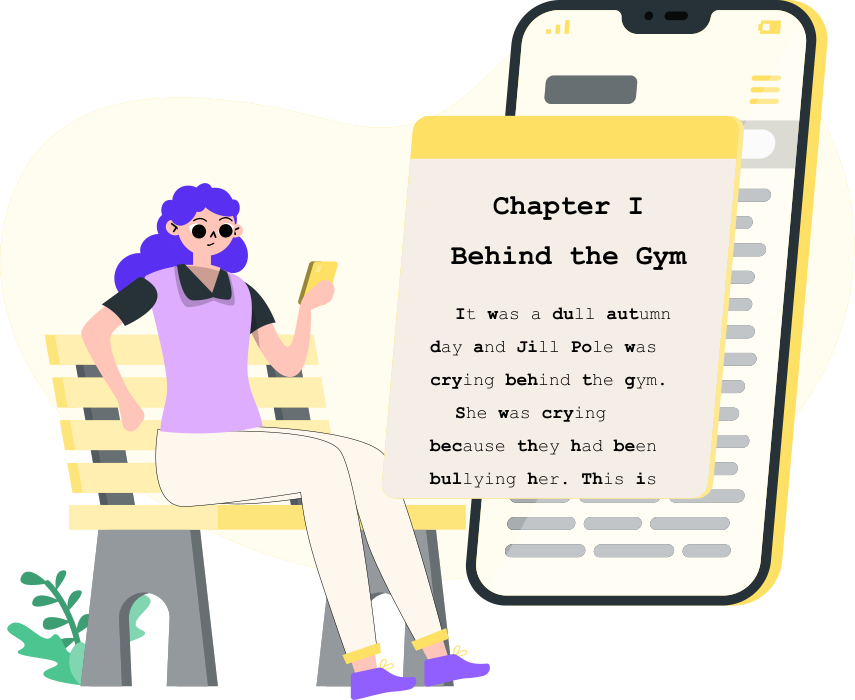
Why it works: digital tools are interactive, which holds attention longer, and text-to-speech handles the hard words so that frustration does not bring the session to an early end. On an e-reader you can also change the font size and the line spacing until the page stops looking overwhelming to that particular child. Reading apps do the same on a tablet, and Celer on iPhone and iPad adds themes with softer contrast and dyslexia-friendly fonts, which is often the single adjustment that makes a page look manageable rather than dense.
How to do it: use an e-reader where the text display can be adjusted, and choose educational apps that make reading genuinely interactive rather than merely animated. Audiobooks work well, especially when the child follows along in the printed book at the same time. Keep an eye on total screen time so the tool stays a tool. Our article on parent support for ADHD reading has more.
If losing your place mid-paragraph is what brought you here, Celer’s moving highlight fixes exactly that.
The Space Around the Reading
The environment around the reading matters as much as the technique inside it, so set up a quiet, comfortable reading corner with the television off and the general noise level down. Beyond the physical setup, what changes things most over a year is patience and encouragement from the adults involved, particularly on the days when nothing goes well. Mark the effort and the progress out loud, however small either looks from the outside, because the long game here is a child who likes reading rather than a child who complies with it. For classroom-specific ideas, see our classroom strategies for teachers.
Regularity helps as much as anything else on this page, since a short daily habit beats a long weekly one and is far easier to keep going through a busy term. Use these strategies with some creativity and a clear sense of what your particular child actually needs, and the reading skills tend to follow along behind the enjoyment rather than the other way around.
Conclusion: Building Confident, Happy Readers
Getting a child with ADHD to the point of confident reading takes patience and the right methods, and it reliably takes longer than anybody involved would like. Use these strategies, follow the child's interests wherever they lead, keep the environment around reading positive, and the change becomes real and visible. Every child is different, so mix and match until you find the particular combination that fits the one in front of you. With the right support in place, reading difficulties stop being the defining story of a childhood and a love of books gets the room it needs to grow.
Try Celer free on iPhone and iPad

⭐️⭐️⭐️⭐️⭐️
"The only time I’m excited to read is with your app."
Dorcas
Related articles
Supporting Your Child with ADHD in Reading: A Parent's Guide
How to build a home where reading feels possible, and how to work with school so both sides pull the same way.
Classroom Strategies: Helping Students with ADHD Read Effectively
Practical accommodations and teaching moves for educators supporting students with ADHD through reading.
The Power of Reading Aloud for Children with ADHD
A guide for parents and teachers: what reading aloud does for a child with ADHD, and how to run sessions they look forward to.